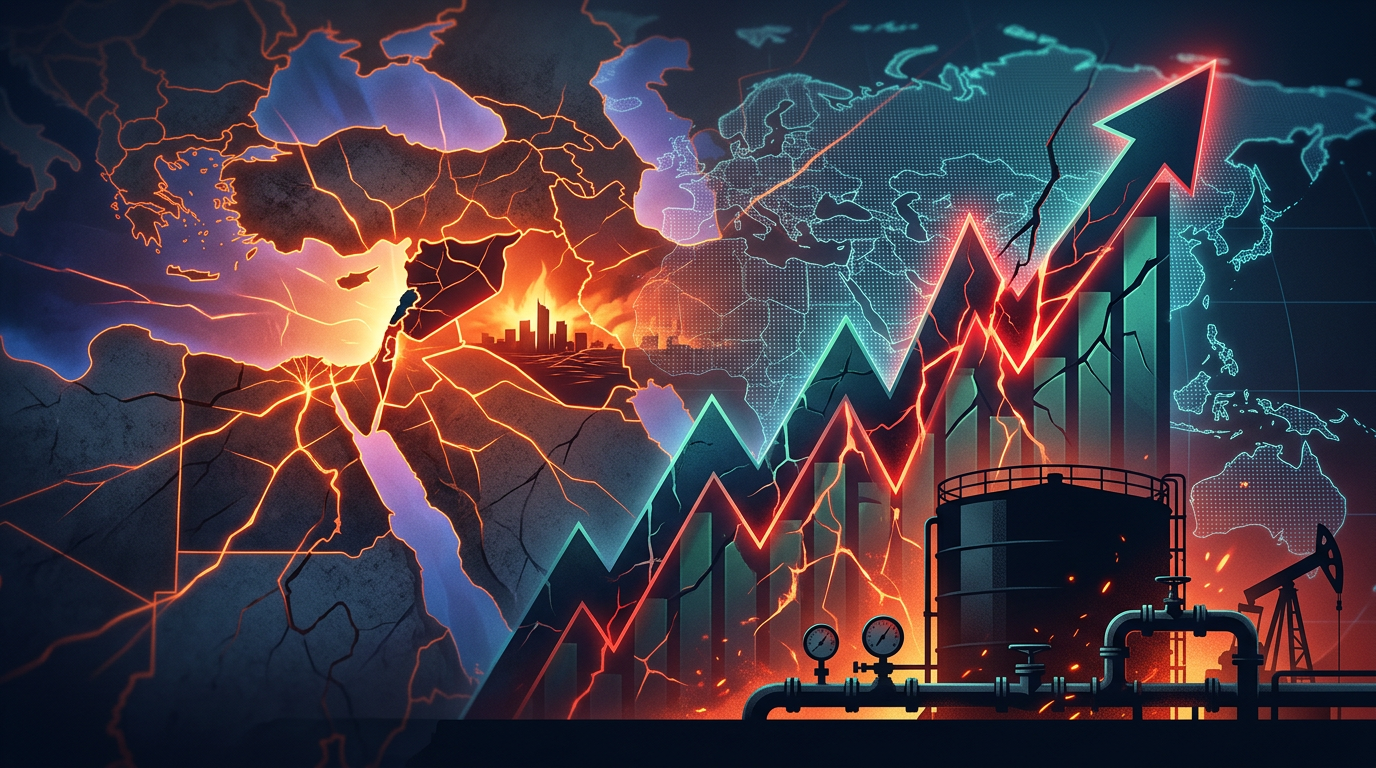
The Heat is Rising: Geopolitics and Your Portfolio
Greetings, seekers of wisdom. It’s Phoenix the Web3 Sensei here. While we usually navigate the digital realms of blockchain and decentralized finance, we cannot ignore the physical world’s tremors. The recent intensification of Israeli strikes in Lebanon—reaching far beyond traditional Hezbollah strongholds—is more than a local conflict. It is a tectonic shift in the global geopolitical landscape with massive implications for your pocketbook, your investments, and the global economy.
As Israel signals its intent to control larger swathes of southern Lebanon, the specter of a broader regional war looms. From the boardrooms of BlackRock to the gas pumps in small-town America, the ripple effects are already being felt. Let’s break down what this means through the lens of macroeconomics and financial sovereignty.
The Energy Bottleneck: Oil as a Weapon of Volatility
Whenever the Middle East trembles, the energy sector vibrates. The current escalation has investors on edge. While we’ve seen temporary dips in oil prices due to speculative rallies, the long-term trend during regional instability is almost always upward.
Larry Fink, the CEO of BlackRock, recently warned that a prolonged conflict in the Middle East could tip the global economy into a recession. Why? Because oil isn't just about fuel for cars; it’s the lifeblood of manufacturing and logistics. If shipping lanes are disrupted or if the conflict draws in major regional producers like Iran, we are looking at a supply shock that could send gas prices skyrocketing.
Sensei’s Insight: High energy costs act as a hidden tax on every consumer. When it costs more to move goods, inflation persists. This makes the Federal Reserve’s job harder, potentially keeping interest rates higher for longer—a move that usually dampens the growth of high-risk assets like crypto and tech stocks.
NATO, Trump, and the Fragile International Order
Adding fuel to the fire is the increasing tension within Western alliances. Reports of the U.S. potentially distancing itself from NATO—often labeled a "paper tiger" by critics—could not come at a worse time. During the recent strikes, there are claims that allies were not consulted, leading to a breakdown in diplomatic trust.
If the U.S. shifts toward an isolationist stance, the burden of stabilizing the global economy falls on a fractured Europe. We are seeing a world moving away from unipolar stability toward multipolar chaos. In such a world, traditional safe havens are being re-evaluated.
The Economic Fallout: Beyond the Battlefield
The human cost of the Lebanon conflict is devastating, but the economic cost is global. Here is how the fallout manifests:
Supply Chain Disruptions: Remittances, which many developing nations rely on, are being throttled as jobs in the Middle East disappear or become unsafe.
Market Volatility: Institutional investors are pivoting. While some stocks might rally on defense spending, the broader market remains skittish. $14 trillion asset managers like BlackRock are sounding the alarm for a reason.
The Rise of Alternative Assets: In times of war and fiat instability, the narrative for decentralized assets strengthens. When banks are at risk and borders are closing, the permissionless nature of Web3 becomes a lifeline.
The Sensei’s Take: Survival in a Volatile Era
We are witnessing a "Perfect Storm." The intersection of territorial expansion in Lebanon, the threat of a U.S.-Iran confrontation, and wavering Western alliances points toward an era of high volatility.
As your Sensei, I urge you to look beyond the headlines. Don’t just watch the bombs; watch the bonds. Watch the price of crude. Watch how central banks react to the looming recessionary pressure. Diversification is no longer just a strategy; it’s a necessity for survival.
Is the global economy entering a dark winter? If the conflict in the Middle East lasts more than a year, as Larry Fink suggests, the answer might be yes. Stay vigilant, keep your assets secure, and always look for the signal amidst the noise.
The world is changing. Are you prepared to rise from the ashes?